
Dispatch

Dispatch is your go-to feed for articles and videos related to how Milwaukee moves, builds, and governs.

Milwaukee

Themes

Linked article

Financial Instability Is Catching Up to the MCTS Next Year

Milwaukee Magazine · Sep 2, 2026
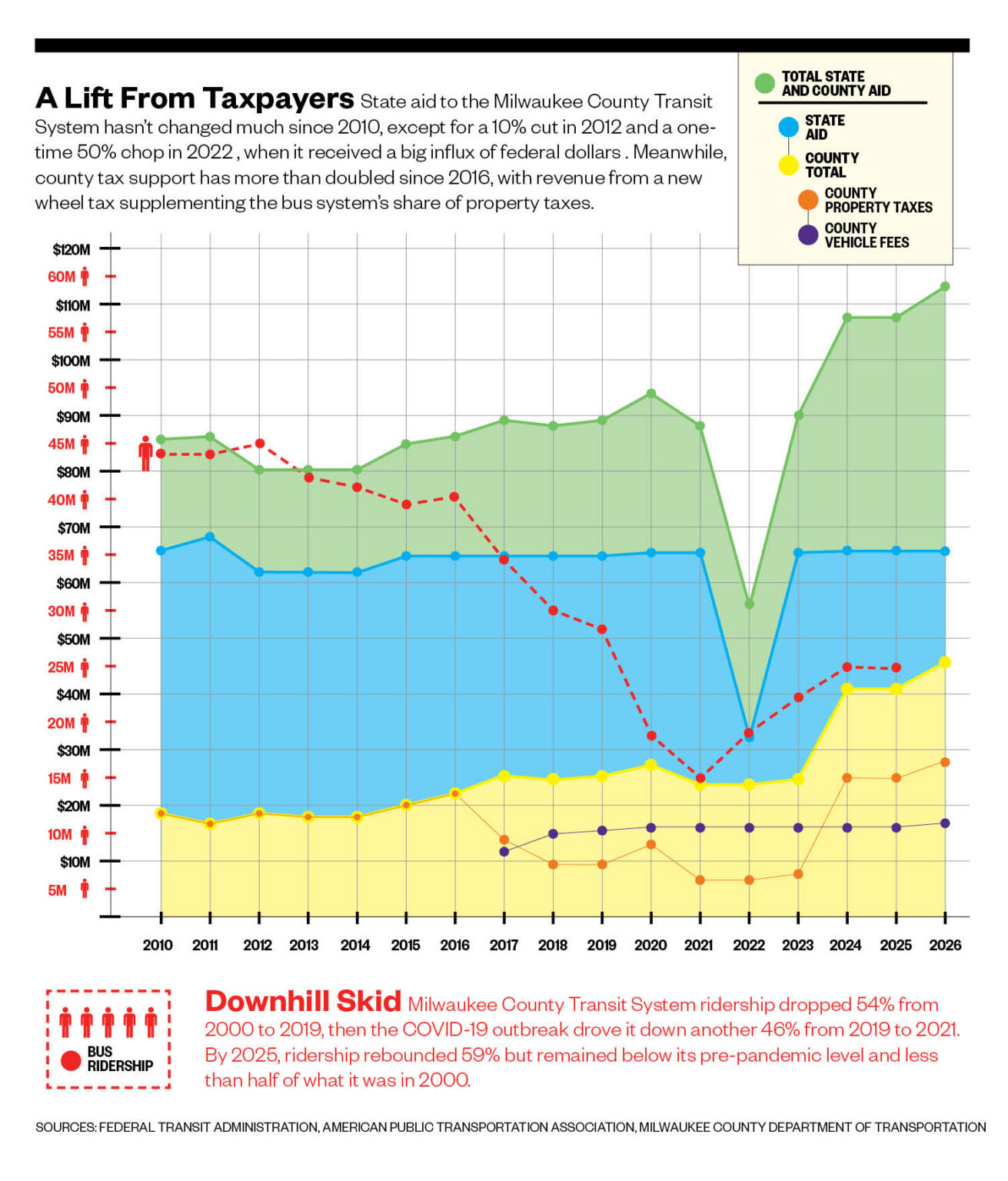
Photo from Milwaukee Magazine

Chart: Milwaukee Magazine, from Federal Transit Administration, American Public Transportation Association and Milwaukee County Department of Transportation data

Commentary

Larry Sandler traces fifty years of Milwaukee County's buses dodging collapse and shows that every rescue was a temporary patch, never a real repair. Federal money meant for buying buses, leftover cash from rail projects the state killed, and $192 million in pandemic aid each covered a hole for a while, and the pandemic money is now gone. The everyday funding underneath never got fixed. State aid to MCTS is lower today than it was in 2011. The county's $30 wheel tax, the closest thing Milwaukee has to a dedicated transit source, does not grow with inflation the way the sales taxes that fund most peer systems do. MCTS runs the cheapest bus ride per passenger of any comparable Midwestern system and covers a larger share of its costs through rider fares than any of them. So the problem is not how the buses are run. It is that the region has never decided what the buses are worth and funded them to match. A system built to last would start from the good transit does for everyone, riders and drivers alike, and then set up a funding source that grows with the economy instead of waiting for the next emergency. That value is beginning to be measured. A preliminary study the county commissioned from the regional planning commission estimates the buses save the region at least $345 million a year in avoided traffic, crashes and pollution, more than twice what the system costs to run.
Linked article

Op Ed: Downtown Boulevard for I-794, Completing MARK Rail Plan Will Build City

Urban Milwaukee · Sep 1, 2026

Photo from Urban Milwaukee

Commentary

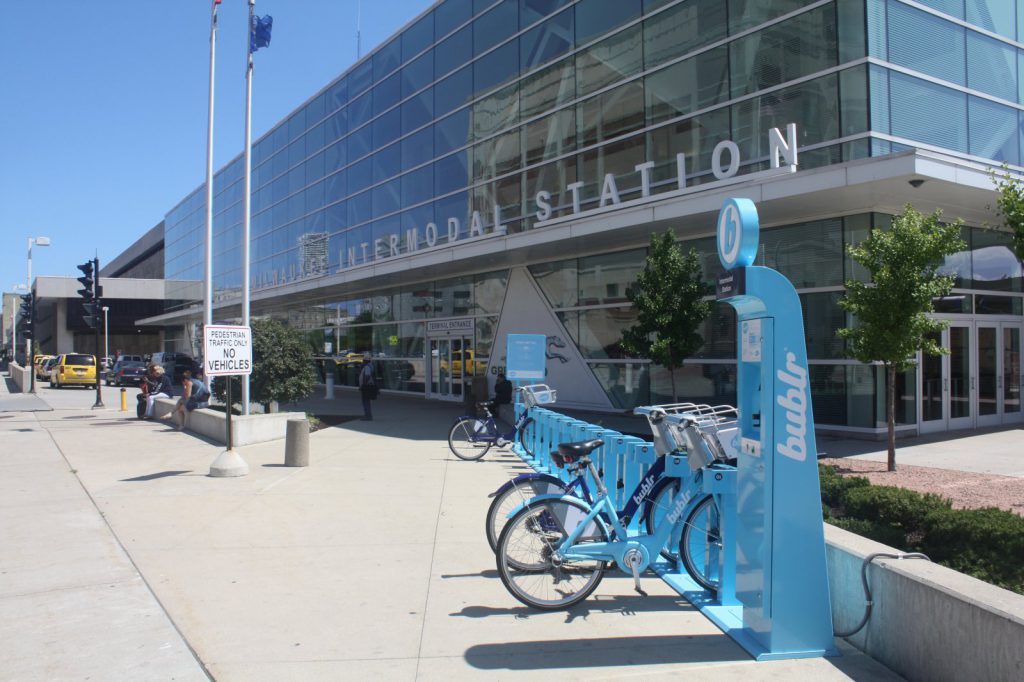
I-794 is a 250-foot-wide band of concrete and ramp structure running about a mile from the Marquette Interchange to the Hoan Bridge. It cuts downtown off from the Third Ward and walls in the Intermodal Station, the city's train and intercity bus hub, along its entire north side. Its bridges have deteriorated to the point where WisDOT counts 28 of them as deficient, so since 2022 the agency has been studying four options: rebuild it as it stands, two versions of rebuilding it smaller, or remove it and replace it with a street-level boulevard. That study has already been through its public rounds, including open houses this spring covering cost, traffic, freight and land use. WisDOT priced all four. Rebuilding as it stands is the cheapest at $425 to $575 million, the two smaller-freeway versions run $675 million to $1 billion, and removal is the most expensive to build at $850 million to $1.25 billion. Removal is also the only option that hands land back: 16 acres opened up for development against 5.1 acres under the freeway options, which WisDOT estimates would support $270 to $490 million in new development by 2050. In July, Mayor Cavalier Johnson came out for one of the improvement options, citing gridlock risk in the warmer months when the lift bridges go up. The draft environmental impact statement naming WisDOT's preferred alternative is due late this year.

Larry Witzling is submitting an opinion into that closing window. He is a professor emeritus of architecture and urban planning at UWM and a former principal at the Milwaukee engineering firm Graef, and he also wrote the economic analysis behind Rethink 794, the campaign for removal, which is worth knowing when you read the dollar figures in this piece. His argument hangs on MARK, a proposed passenger rail line from downtown Milwaukee through Racine to Kenosha that would connect to Metra service into Chicago, now being planned by a three-city commission formed in late 2025. Witzling says the freeway and the railroad are one decision rather than two, and asks WisDOT for a one-year pause so they can be planned together.

Here is what makes the ask worth taking seriously even if you think the freeway should stay. Every other block downtown pays for schools, buses and libraries. All the land under 794 has generated almost nothing since the 1960s, and WisDOT's own study puts the foregone development at up to half a billion dollars by 2050. What it buys in exchange is a route for 73,900 vehicles a day at the river, roughly 26,600 of which are passing through the interchange to reach the rest of the freeway system rather than stopping downtown at all. Milwaukee has spent decades trying to build a downtown that works on foot, and the largest single obstacle to that is publicly owned, structurally deficient, and up for a decision this year. It sits directly north of the one building in the city where a train, a bus and a streetcar already meet. The mayor and this professor have looked at the same corridor and landed on opposite answers, which is reason enough to read the argument the mayor did not take.

Linked article

Some Wisconsin communities considering restrictions on use of e-scooters, e-bikes

Wisconsin Public Radio · Jun 19, 2026

Photo from Wisconsin Public Radio

Commentary

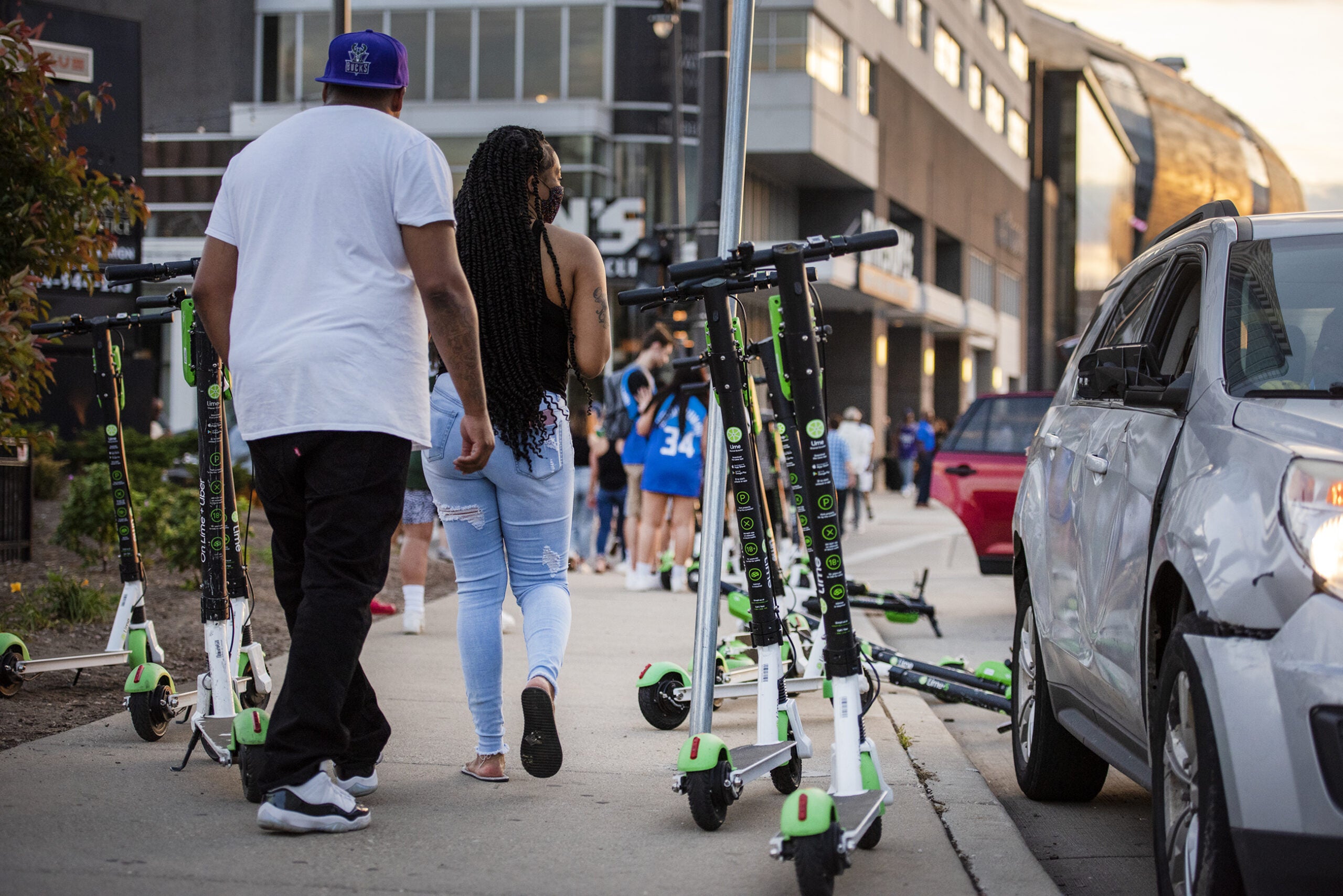
A Lime scooter rider seriously injured a downtown Milwaukee nightclub owner on the sidewalk last week, leaving him with spinal fractures, broken ribs and a broken foot. The rider, who admitted he knew sidewalk riding was banned, was arrested and charged with a felony, and that accountability is warranted. Riding e-mobility on sidewalks is dangerous and illegal, and several Wisconsin towns are now weighing new restrictions in response. I think the bigger picture is still worth holding onto, though, because these are early days for e-mobility and everyone (riders, cities and operators) is still learning. Even now, these devices ask far less of a city in space, cost, and danger to others than the private cars we treat as normal. The larger risk I worry about is that a patchwork of town-by-town bans shuts the door on it before it can grow into reliable everyday transportation that is cheaper and safer than driving.

Linked video

Why are US Cities all Car Based?

Alan Fisher (Armchair Urbanist) · 6 min

Commentary

This six-minute explainer breaks down how the country talked itself into car dependence after World War II. Milwaukee was right in the mix. We had a real streetcar network once, and we ripped it out ourselves (a story this site will absolutely come back to).